
New York's Same-Day Arrest Landscape
No single New York page lists every arrest made in the past day. One person may be booked by a county sheriff. Another may land in a city lockup or a New York City facility. Each system publishes on its own schedule. Some county rosters show who is in custody right now. Other agencies post only a brief arrest synopsis. Some share a daily activity log. Others show no public roster with names and booking photos at all. A current New York list answers one narrow question. It shows who appears in that system at its last refresh. It is not a statewide arrest count or a court record.
Booking is processing, not the arrest itself. Someone released quickly may never show up in a later custody search. The agency that made the arrest and the county holding the person can differ. Full New York coverage depends on both.
Same-day booking data changes fast. A person listed as in custody this morning may already be released, so the roster is best treated as a live snapshot.
Check New York Arrests Today
Start with where the arrest likely happened. Then find the agency that took custody. County lines, city police beats, and State Police zones rarely match the jail that holds a person, so this step matters. The New York County Directory connects to each county's official page and its current booking or recent-arrest feed.
- Identify the likely agency and county. Use the location of the arrest as a starting point, but allow for a transfer or a State Police booking in a neighboring county.
- Open that county's official site. Look for an inmate or custody search, a recent-arrests page, or a sheriff activity report. Read the label on the source; the word “recent” does not promise a rolling 24-hour window.
- Check what the source actually covers. Note the update date, booking date, custody status, and any notice about photos or excluded records. A daily activity page may report jail totals without listing names.
- Ask the holding agency to verify a missing result. Contact its records or jail unit through the official site. If a current screen is not available, ask the agency about its records-request process and the record it keeps.
A random web result proves nothing about custody. A custody-alert service answers a different question than a county arrest feed, so confirm with the agency holding the record.
New York Current Custody Sources
New York custody listings come with their own labels and update schedules. No state-run 24-hour window applies across them.
| Official source | What it offers | Limit to keep in view |
|---|---|---|
| Allegany County inmate search | Current county custody search; images may appear on some records. | No fixed refresh or complete 24-hour window was located. |
| Chautauqua County prisoners | Live or server-backed prisoner interface; a legacy booking page reflects an older photo pattern. | It is a custody view, not a list of every arrest. Check current card and image behavior. |
| Greene County inmate search | Current names, photographs, charges, and links to VINE status may be shown. | It is not a historical arrest log; publication and retention are agency controlled. |
| Steuben County incarcerated individuals search | Current custody search with booking fields, photos, and VINE status links. | Current custody does not establish every same-day arrest or final court outcome. |
| Washington County recent arrests | Selective official arrest synopsis or slideshow. | It is not a guaranteed complete rolling roster. |
| Tompkins County activity logs | Daily jail-census or transparency material. | A daily update does not make it a named, photo-complete booking feed. |
Some New York counties publish no same-day roster at all. Others point visitors to a VINE link or a correctional site instead. That gap simply marks what is public right now. An agency may keep internal arrest records. It may update its site later.
New York's 24-Hour Arrest Fields
New York has no standard statewide field set for booking data. Each current-custody page shows its own details, and only the fields the agency itself displays should be trusted.
| Field | What it can show | Source limit |
|---|---|---|
| Booking date | When the person entered the facility's booking record. | Wayne County groups records by booking date; that does not promise a rolling 24-hour window. |
| IN or OUT status | Whether the person appears in or out of custody in the displayed record. | Wayne may show this status; it can change after the page refreshes. |
| Name and charges | Identity and the charges attached to a current booking. | Greene may show charges; a booking charge is not a court finding. |
| Photo | An image, if the county chooses to display one. | Greene and Steuben searches may show photos; other systems hide or omit them. |
| VINE status link | A path to a participating custody-notification service. | Some records link to VINE; this does not establish statewide or instant coverage. |
A blank cell means nothing statewide. It just reflects that one county's roster, and no other New York agency's records.
Note: A custody page can change between checks, so note its visible update label before comparing it with another source.
New York Booking Photos Vary
Booking photos in New York follow no single pattern. Some county searches display images. Others do not. The Yates County interface may hide photos or show a missing-image marker instead, and plenty of counties offer no complete roster at all. A blank space does not mean no booking photo ever existed. A third-party copy of a mugshot proves nothing about what an agency would release.
Washington County works differently. Its public page packages recent-arrest material into a synopsis or slideshow format, which is a selective-news approach rather than a booking grid. It is not a jail roster. The Washington County Sheriff's official recent-arrests page shows this selective publication style plainly.
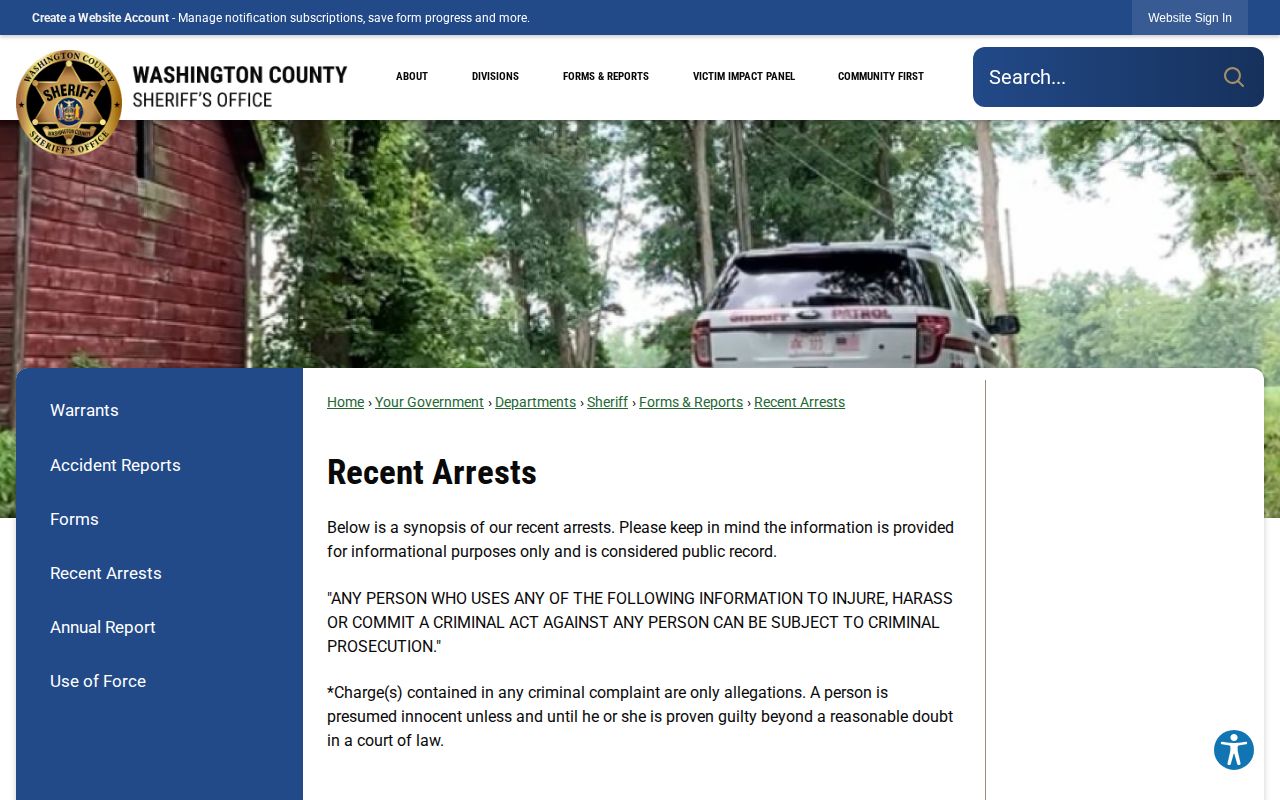
That difference matters everywhere in New York. A selective public-information post can confirm an agency announced an event. It cannot replace the current custody search or a full booking file. Photo visibility is a publication choice. It rests on agency policy. The record's legal status matters too. The public roster is a poor test of whether an image exists at all.
New York State Police Activity
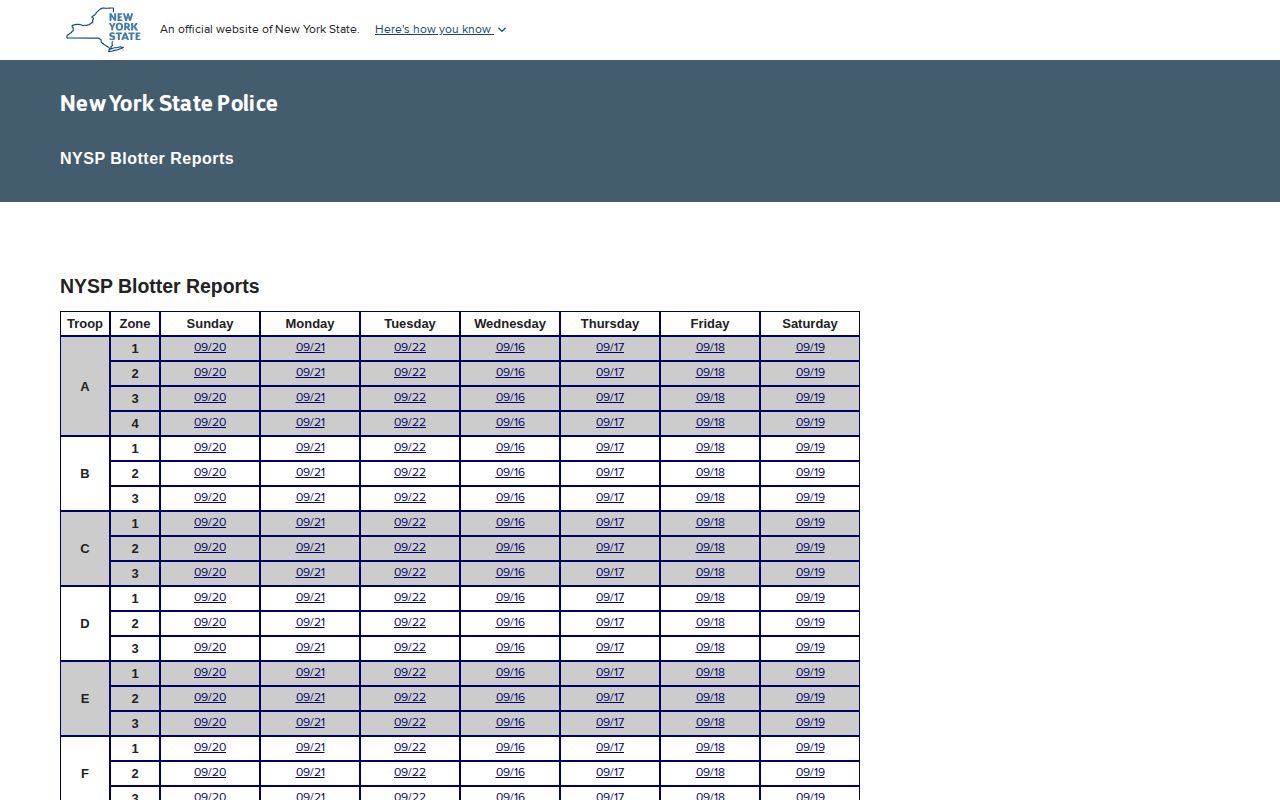
The New York State Police publish a daily Media Reports grid. It is sorted by troop and zone. Treat it as an activity source. It is not a county jail roster. Its cells can help you locate a recent NYSP report. But the picture gets complicated after arrest. A trooper's arrest often lands the person in a county jail. That county's roster describes the facility's current population rather than every arrest made there. The NYSP Media Reports grid displays the daily troop and zone structure with dated links. It is not a statewide list of everyone booked in the last day.
A State Police release can tell you where a person was remanded. The NYSP report about an arrest in Schroon Lake is a good illustration. It shows why arrest location and jail location must be checked separately. The county roster may confirm current custody. Yet it is not a full NYSP arrest log. A same-day New York screen can stay murky. Compare the agency release side by side with the county jail view. Then call the record holder. The Weekly Arrest Log covers wider publication and archive patterns.
New York City Arrest Data Lags
New York City handles custody differently from the rest of the state. Instead of a county sheriff roster, the New York City Department of Correction (NYC DOC) release-information page covers all five borough counties: Bronx, Kings, New York, Queens, and Richmond. It tracks correctional custody and release. It does not search every New York City arrest or police lockup in real time.
Timing matters here. NYC DOC itself warns that data entry can trail an arrest by 48 hours or more. The page also leaves out certain groups. People held only in police lockups, juveniles, and people in federal or state custody never appear. Someone given a desk appearance ticket, bail, or release on recognizance can be out before ever entering DOC custody. A blank result soon after an arrest proves nothing.
City and county systems share no roster and no clock. Go to the agency most likely holding the person. Ask it to verify any gap.
Note: The NYC DOC route covers correctional custody and does not confirm people released before intake.
Verify New York Arrest Records
A fresh booking rarely appears at once. Intake takes time. A site may refresh on its own unknown schedule. People also transfer or leave custody quickly. New York sources set no common public posting time, and a daily page may list a calendar day, a current jail population, or selected agency news. Those windows differ.
Use a missing result carefully. A name absent from a public screen can reflect timing, custody in another jurisdiction, a source's limits, or an unpublished record. It is not proof that no arrest took place.
For a known person, call the jail or records unit shown on the official site. Ask whether the person is held there now. Ask which record covers a past booking. New York has no single local request form or fee. Nor is there a set response timetable.
The New York VINE phone service can flag a custody change. A local SAVIN link does the same. A generic county link, though, does not prove a fresh booking is present yet. Notification services answer only whether their participating system reports a person's status. They cannot replace a live jail confirmation or show every arrest detail.
New York Records After Release
A New York custody roster shifts constantly as people enter, leave, or move between facilities. After release, a person drops off the current list. The arrest or booking record still sits with the agency. Keep the two questions separate. A current-custody search tells you where someone is now. An arrest record documents a past event. It also records the processing.
For an old New York booking, ask the agency that holds the record. Police, sheriff, and jail may each keep a different piece. If a case reaches court, its later disposition records the outcome. A booking charge does not. An old roster is not the official archive.
Summaries can omit appearance tickets, quick releases, juvenile or sealed records, and events handled elsewhere. Weigh the source's scope against the question, then contact the county records unit when needed.
Note: A roster reflects the source's current custody view, while an arrest file and court disposition follow separate records paths.