
New York Weekly Arrest Logs Span Agencies
No single blotter covers every New York arrest. Some county sheriffs post weekly reports or jail activity summaries; others publish no name-based log at all. The New York State Police runs a daily grid split by troop and zone. Regional newsrooms keep separate arrest stories. None of these records share one window, field set, or archive.
A weekly log still earns its keep. It helps when a live roster no longer lists someone or a weekend batch runs late. It is not a full arrest history. People released fast, given a desk appearance ticket, or handled elsewhere may never appear. Read the source label and dates each time.
For custody right now, use the jail's live view. The Daily Arrest Report page explains the limits of same-day county views and how to reach a source.
Official New York Weekly Arrest Log Sources
Official county publications lead the list. Across New York, these examples show different record types. No standard day count fits every county log.
| Official source | Format and scope | Archive or photo limit |
|---|---|---|
| New York State Police Media Reports | Daily troop and zone grid with dated report links. | The current blotter is not archived; it is activity reporting, not a statewide jail roster. |
| Ulster County Sheriff's arrest reports | Recurring county arrest reports rather than a live custody roster. | Use the dates exposed by the county; no statewide retention window applies. |
| Tompkins County Sheriff's activity logs | Daily activity and transparency material, including jail-census information. | Not a named, photo-complete booking roster. |
| County weekly PDFs or press summaries | Agency-specific weekly or periodic summaries; some batch weekend activity. | Posting and archive depth differ by county; a summary may not include every arrest. |
Start with the New York County Directory. Find the county, then search the sheriff's site for its arrest reports or activity logs. Read the dated report as its stated coverage period.
Note: A daily activity page can describe agency work without listing each person booked into a jail.
Read a county arrest log in order. Check which agency issued it. Match the report's date range to the event, then follow any linked case or custody source for a later status.
- Confirm the publisher and the log type.
- Read the post date and the dates covered.
- Verify current custody or court outcome separately.
New York State Police Activity Logs
The New York State Police organizes its Media Reports as a grid. Troops, zones, and days frame the layout. That structure makes browsing recent agency activity across the state simple. It is not an archive. The NYSP newsroom states plainly that the daily blotter is not archived. The grid shows only what is exposed now, unless a press release preserves an event.
A State Police release reports agency activity; a county roster reports who is held now. A trooper's arrest may end in a county jail, so the arrest and custody locations can differ. Follow the named custody destination for status. Neither source lists every arrest statewide. The NYSP Media Reports page displays the troop-and-zone layout.
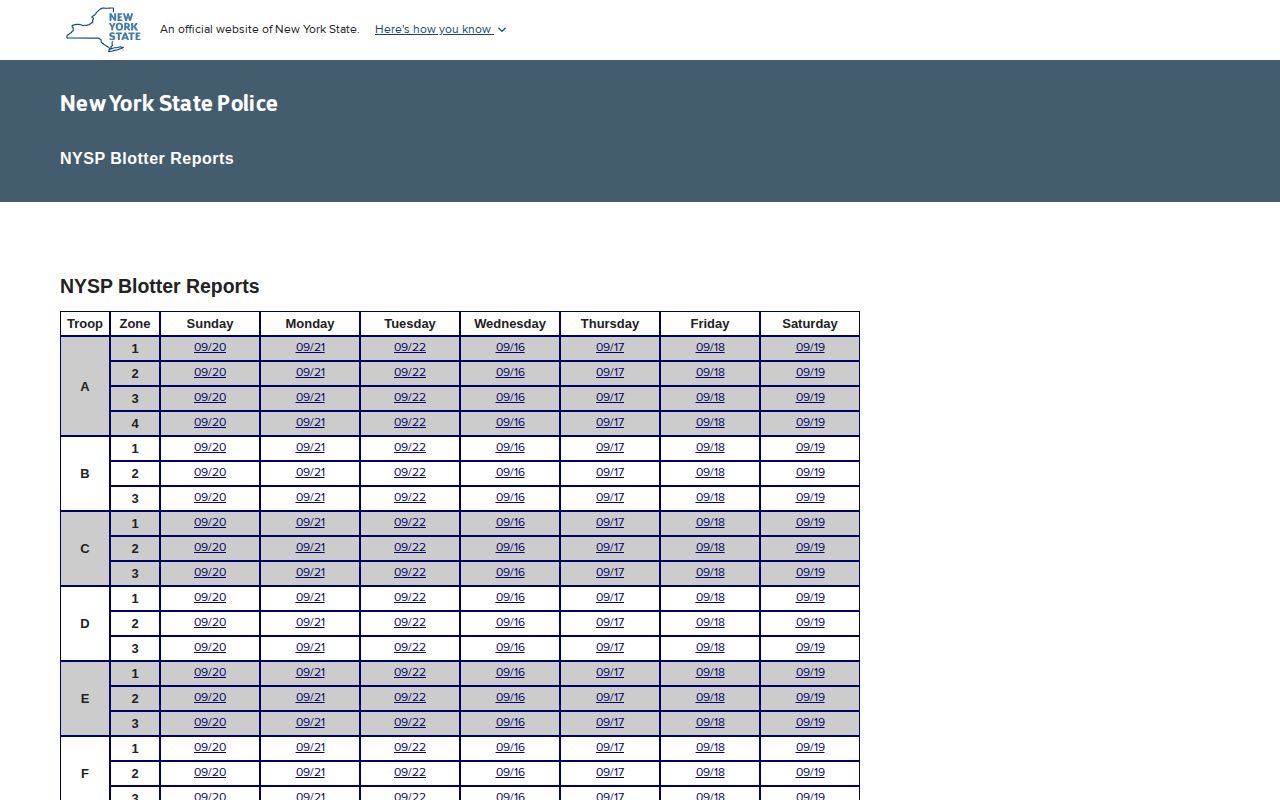
The grid resets, so save the release date when an event matters later. Nothing is stored for you. A cell's presence does not roll State Police arrests into one uniform statewide count.
Regional New York Arrest Blotters
News archives often outlast the police pages they report on. The Times Union covers the Capital Region; Syracuse.com reports from Central New York. The Democrat and Chronicle covers Rochester and Monroe County.
In Western New York, The Buffalo News is the regional source. Newsday handles Long Island and the New York City area. Spectrum News NY publishes statewide and regional reports.
These are secondary sources, not official arrest databases. A story captures an event at publication time. It cannot show current custody or a court outcome, and later charges may never appear. Go back to the agency or court for status.
No outlet offers a universal takedown form. For a factual correction, contact the newsroom's correction or privacy desk with a certificate of disposition or other record. The outlet decides whether to revise, and deletion is not guaranteed.
Secondary New York Weekly Arrest Logs
Unofficial aggregators offer quick arrest feeds. Coverage shifts and stays partial. RecentlyBooked's New York section promises a past-30-day view with multiple daily updates. Its page shows only part of the state's counties. BustedNewspaper's New York landing page links to county listings but holds no agency archive. Details and images there may be copied or stale.
Treat these as leads only. Check the responsible police, sheriff, jail, or court first. A third-party page cannot prove current custody or a final charge. It may linger online after the official source changes. When sources conflict, trust the agency record or court disposition for the question at hand.
Note: A secondary page can point toward an event, but it may not reflect a later correction or the current status of a case.
Weekend New York Arrest Posting
Weekend arrests in New York often surface late. County weekly reports frequently fold Saturday and Sunday into one posting that lands the next business day. A quiet Monday means nothing by itself. It just reflects how the publication cycle works. Holiday enforcement adds a second layer. NYSP sometimes releases totals after Super Bowl, Thanksgiving, or the Christmas-New Year stretch, but those campaign numbers count only that operation. They say little about arrests statewide.
Never add campaign totals together. A holiday release counts one defined enforcement push, while a county report may tally bookings by a different rule entirely.
Missing a weekend arrest on Monday? Check the report dates first. Then compare the agency release against the jail's current roster. Every office counts arrests, bookings, tickets, and contacts its own way, so merging unlike records only distorts the picture.
New York Weekly Arrest Log Archive Depth
How far back New York records reach depends on the publisher. The NYSP blotter grid is never archived. A separate release may preserve a single event. County PDFs can stretch across weeks or months of arrest reports. News archives sometimes run deeper, and aggregators advertise only a limited window. None of them forms a complete state index.
| Record source | What may remain available | Important boundary |
|---|---|---|
| NYSP daily grid | Only the currently exposed grid period; an independent press release may preserve an event. | The daily blotter is not archived. |
| County reports | Some PDF or report pages keep weeks or months; other agencies post periodic summaries. | There is no statewide public window or common retention promise. |
| Regional news archives | Older stories may remain searchable by place, date, or subject. | News coverage is not an official custody or disposition record. |
| Local jail record series | Retention follows the public agency's record schedule and the record's type. | A schedule does not promise that an online roster stays visible that long. |
The New York State Archives prison-record guide covers historical state-prison research. Its holdings are incomplete. Some case files are samples. They are not a census of every prisoner. So don't route a county booking question there without a clear reason. The New York State Archives prison-record guide spells out those limits plainly.
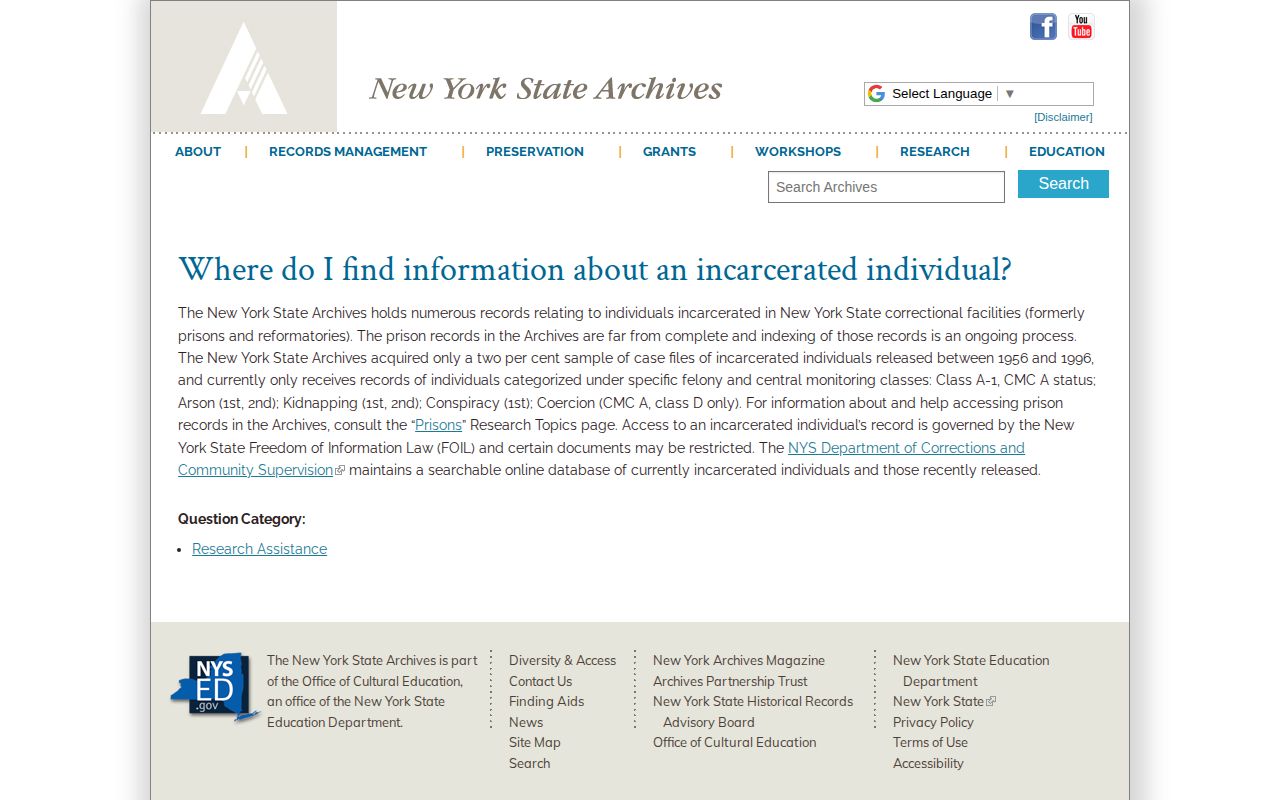
State-prison records and local jail arrest files are separate collections. A local retention schedule never turns an old online blotter into a full history.
Note: A page's public web window and an agency's retention schedule measure different time spans.
Find Older New York Arrest Records
For older New York arrest records, go straight to the agency. Ask the one that created or holds the item. That may be a sheriff, a police department, a jail, or a State Archives collection. A statewide schedule explains retention. Yet sealing rules still govern access. Know the record type and its holder before you write. The New York State Archives' search-for-records page and its prison guide help sharpen a request. Send a full name, the facility, and an admission or conviction date. Include a DIN or inmate number when you have one. Holdings run incomplete. Access may be limited by law, so expect no standard fee or response time.
- Choose the right record. State whether the request concerns a daily commitment record, a jail case file, an arrest report, or a historical state-prison file.
- Identify the likely holder. Use the arresting agency or holding jail for local records; use the State Archives only for records in its custody.
- Give useful search details. Add the full name and known dates, facility, identifier, and collection. A focused request is easier to route than a broad request for every record.
- Ask about access and disposition. The agency must apply its retention schedule and any sealing rule to the exact series. A schedule alone does not say that a specific photo or case file is still available.
The LGS-1 law-enforcement and incarceration schedule sorts local jail series apart. Item 1250, the master summary or daily commitment-and-discharge record, is permanent. Item 1251 usually lasts 15 years after death or discharge. It turns permanent if it replaces the master summary. Item 1252 stays until no longer needed. Daily population and visitation records run three years; inspections run six. The schedule also treats local arrest and identification files on their own terms. Those include photos, fingerprints, and digital mugshot material. Item 1224 carries separate rules. A favorable disposition can trigger sealing plus photo-return or destruction duties. A permanent commitment ledger is not a public photo gallery.
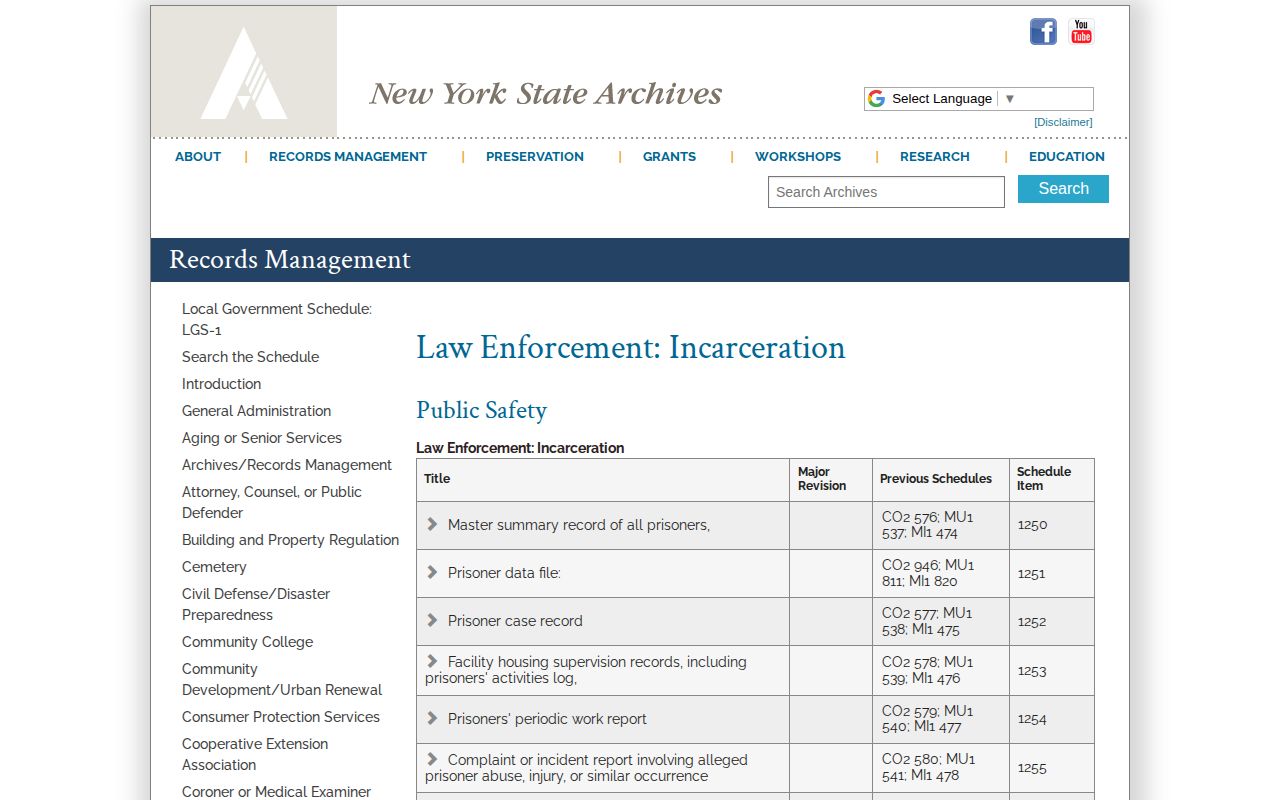
Ask what remains by citing the exact series and its disposition status. An agency's choice to post online and its duty to retain records are two different questions.
Note: A permanent commitment record does not make each roster entry or booking photograph permanently available to the public.